It’s 3am. You’ve fed her, burped her, rocked her, shushed her. You’ve tried putting her down twice and she screamed both times. Now you’re sitting in the dark with your phone, typing “why won’t my baby sleep” into Google, wondering if you’re somehow the only one this is happening to.
You’re not. Not even close. Baby sleep problems are one of the most searched topics by new parents in the middle of the night, and there’s a very real reason for that. This is genuinely hard. The fact that you’re here trying to figure it out means you’re already doing your job.

The Most Common Baby Sleep Problems (and Why They Happen)
Here’s something that actually helps to know: most of what feels like a problem is your baby’s biology doing exactly what it’s supposed to.
Day and night confusion is probably the most disorienting thing in those first few weeks. Your newborn spent nine months in a dark, warm environment where nothing indicated the difference between day and night. She simply has no idea that you sleep when it’s dark and stay awake when it’s light. This is not a parenting failure. It’s normal, and it typically sorts itself out between six and eight weeks as her circadian rhythm starts to develop.
Short naps drive a lot of parents to the edge, but a 20 to 45 minute nap is developmentally normal for a young baby. A baby’s sleep cycle is much shorter than an adult’s, and many babies wake fully between cycles before they’ve learned to connect them back together. It doesn’t mean your baby is a bad sleeper. It means your baby is a baby.
Frequent night waking is exhausting, but it has real reasons behind it. Young babies have small stomachs and need to feed often. Developmental leaps temporarily disrupt sleep. Sleep associations, meaning the conditions your baby was in when she fell asleep, make her expect those same conditions when she surfaces between cycles later in the night. All of this is normal, even when it doesn’t feel that way at 3am.
Not settling unless held is also completely standard newborn behaviour. Babies are biologically wired to want closeness and contact. It’s not a habit you accidentally created in the first two weeks. It’s just how they’re built.
Safe Sleep First: What the American Academy of Pediatrics Recommends
Before getting into what to try tonight, it helps to have the safe sleep basics clear, because everything else builds on that foundation.
The American Academy of Pediatrics recommends putting your baby to sleep on her back every single time, for every nap and every night sleep, no exceptions. A firm, flat sleep surface is essential. That means no pillows, no bumpers, no loose blankets, no soft toys in the sleep space at all. The crib or bassinet should have a tight-fitting mattress sheet and nothing else in it.
Room sharing is recommended for at least the first six months. Having your baby sleep in your room in her own separate sleep space is associated with a significantly lower risk of sleep-related infant death. A bedside bassinet makes this practical, keeps her close for night feeds, and means you are not walking down a hallway at 2am every time she stirs.
Bed sharing is different from room sharing, and the American Academy of Pediatrics advises against it on safety grounds, even when parents are exhausted and it feels like the only option.
If you want to go deeper on all of this, I have a complete guide to baby sleep safety that walks through everything in much more detail.
What Actually Helps: Practical Tips for Tonight
These are the things that genuinely make a difference. Not magic, not guaranteed fixes, but real things you can try starting tonight.
Watch her wake windows
The most overlooked reason a baby fights sleep is that she’s already overtired. Overtired babies are harder to settle, not easier, because their bodies are flooded with the stress hormone cortisol. A newborn can typically only handle 45 to 90 minutes of awake time before she needs to sleep again. By two months, that stretches slightly to around 60 to 90 minutes. Learning to read your baby’s tired cues and starting your settling routine before she hits the wall makes a real difference. I have a full breakdown of age-appropriate wake windows if you want to dig into the specifics.

Try white noise
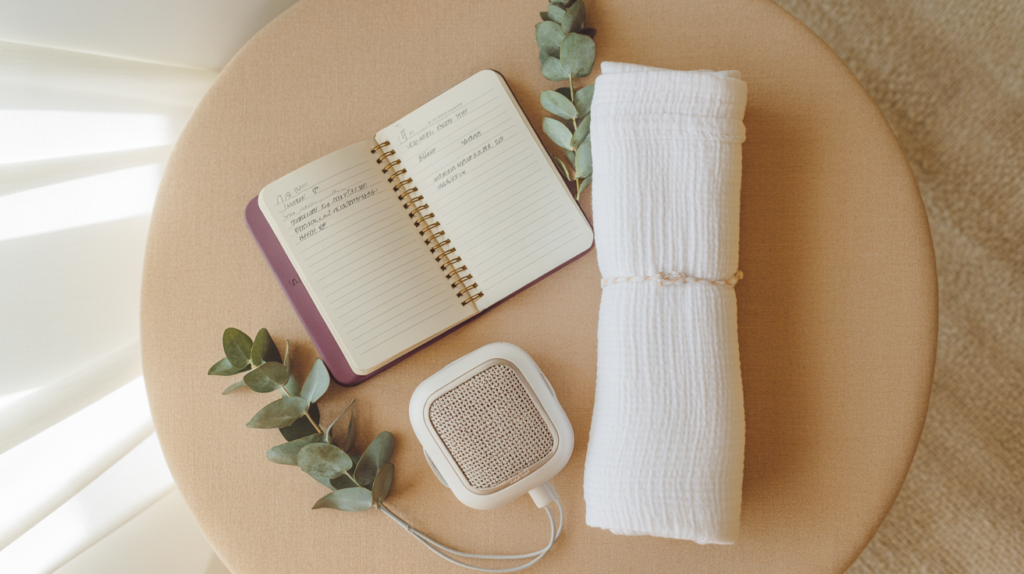
White noise mimics the sounds your baby heard in the womb, which were louder than most people realise. Blood flow, a constant heartbeat, muffled voices. A consistent shushing or static sound can help a baby fall asleep faster and stay asleep when noise happens in the house. A dedicated white noise machine is worth the investment because it runs continuously without you worrying about phone settings or timers cutting out at exactly the wrong moment. Place it near the sleep space, not right next to her head, and keep the volume at a moderate level.
Swaddle for newborns
Young babies have a startle reflex, called the Moro reflex, that can jerk them awake just as they’re drifting off. A firm swaddle suppresses that jerk and lets them drift into deeper sleep without startling themselves back out of it. Most newborns sleep noticeably better when swaddled in the early weeks. A good swaddle blanket set helps you get a snug, consistent wrap even at 3am when your coordination is not at its best.
One important note: once your baby starts showing any signs of rolling, stop swaddling immediately and transition to a sleep sack. If you’re not sure when or how to make that switch, this guide to swaddle vs sleep sack covers exactly what to look for.
Build a simple pre-sleep routine
Babies pick up on patterns faster than most new parents expect. Even at six weeks, a short consistent sequence of the same steps begins to signal that sleep is coming. A warm bath, a feed in dim light, a few quiet minutes in the same chair, then into the sleep space. The exact sequence matters less than doing it the same way each time. Over weeks, your baby’s brain starts connecting those cues to sleep and begins winding down in anticipation.
Try putting her down drowsy but awake
This is easier said than done in the early weeks, and no one expects you to nail it immediately. But the principle is worth understanding. If your baby always falls asleep while feeding or in your arms, she will expect those same conditions when she wakes between sleep cycles in the night. Gently practising placing her in the crib while she’s drowsy but still slightly awake helps her learn to complete the transition on her own. Even occasional success with this, once every few nights, is real progress.

Use daylight in the morning, darkness at night
This is one of the most effective things you can do for day and night confusion, and it costs nothing. Open curtains and get as much natural light into the room as you can during morning feeds. Keep lights dim after sunset and avoid screens close to bedtime. The contrast in light exposure helps regulate your baby’s melatonin production and speeds up the process of her internal clock shifting toward your schedule. It won’t fix everything overnight, but consistent exposure to this light difference makes a real difference over two to three weeks.
Contact naps are okay
Especially in the first six weeks, survival mode is entirely valid. If your baby will only nap on you and you need the rest too, a contact nap is not setting you up for disaster. You are not creating a permanent habit that can never be undone. You are getting through a hard stretch. The independent sleep work can come later, when you both have a bit more capacity for it.
Experiment with bedtime timing
An overtired baby is much harder to settle, which means a later bedtime often backfires. If you’re consistently dealing with a screaming, inconsolable baby at 8pm, try moving bedtime 30 to 45 minutes earlier. Some babies do remarkably better at 6:30pm than at 8pm. You can also try nudging bedtime slightly later if very early morning wake-ups are the problem. Watch the pattern for a few nights before drawing conclusions.
When Baby Sleep Problems Are Worth a Doctor Visit
Most baby sleep struggles are completely normal, but some things are worth flagging to your paediatrician rather than waiting out.
Call your doctor if your baby consistently seems to struggle to breathe during sleep, if you notice regular snoring or unusual breathing sounds, if she is extremely difficult to wake even when she should be hungry, if sleep changes are happening alongside a fever, or if she consistently seems to be in pain when lying flat. These are not common, but they’re worth checking rather than assuming they’ll resolve on their own.
And if something just feels wrong to you, trust that feeling. You know your baby better than anyone.
A Note on Newborn Sleep Schedules
Something worth knowing: newborns don’t have schedules. They have rhythms. Trying to impose a fixed schedule in the first six to eight weeks often creates more stress than results, because your baby’s brain isn’t developmentally ready for it yet.
What you can do is follow her lead and start noticing her natural patterns. Feed, wake, sleep cycles often emerge on their own. A more predictable newborn sleep schedule typically starts to take shape somewhere between eight and twelve weeks. Not day one.
You’re Going to Get Through This
Back to that 3am version of you. The exhausted one, Googling in the dark, wondering if this is always going to be this hard.
It isn’t. I know that’s hard to feel right now. But the early weeks are genuinely the hardest stretch, and they do pass. The tips above are real things that help. But the biggest thing working in your favour is simply that your baby is growing and changing every single week. The sleep that feels impossible right now will not feel this way forever.
You are not failing. You are not doing it wrong. You’re just in the hard part.